

Designers to Know: Percival Lafer
A brief history of Brazilian modernism and one of its key furniture designers.


Brazilian Modernism, Briefly
Architect, product, and furniture designer Percival Lafer was born in Brazil in 1936 and began designing furniture in 1961. A graduate of architecture school, he turned to furniture when he and his brothers inherited his late father’s furniture company, Móveis Lafer. He’s a key figure in the design movement known as “Brazilian modernism.”
Brazilian (mid-century) modernism focused on function and organic shapes, not unlike its Western counterparts. Materials available elsewhere, like fiberglass, stainless steel, and plastic were not as accessible in Brazil, so designers turned to local materials of wood, cane, leather, and wicker. These natural resources and a lack of industrialization kept furniture production relatively artisan until the mid-to-late 1960s. The craftsmanship and use of hardwoods novel to U.S. consumers lent the designs a richer, more sensuous feel.
In another piece I may do a deeper dive into Brazilian modernism, the political dynamics that informed the work, and the relationship between architecture and interior design. But some names to look into if this style appeals to you: Sergio Rodrigues, Lina Bo Bardi, Jean Gillon, Joaquim Tenreiro, and Jose Zanine Caldas.


Lafer’s Work
In 1961, Lafer launched the renowned “MP-1” Armchair to instant acclaim. It featured a steel base covered in a thin layer of solid rosewood and a seat upholstered with layers of foam, rather than springs. This provided Lafer the leverage and confidence needed to create his company, win patents, and name the brand Lafer MP–MP stands for Móveis Patentados or "Patented Furniture."

Lafer thought of design as a way to make technology and comfort widely available, creating good pieces at affordable prices through the use of mass production. Innovation, albeit now an overused word, is a recurring theme throughout his work. For example, the 1965 MP-041 series’ seats came with solid wood frames and pre-shaped cushions, making for easy assembly and allowing for flat-pack delivery.
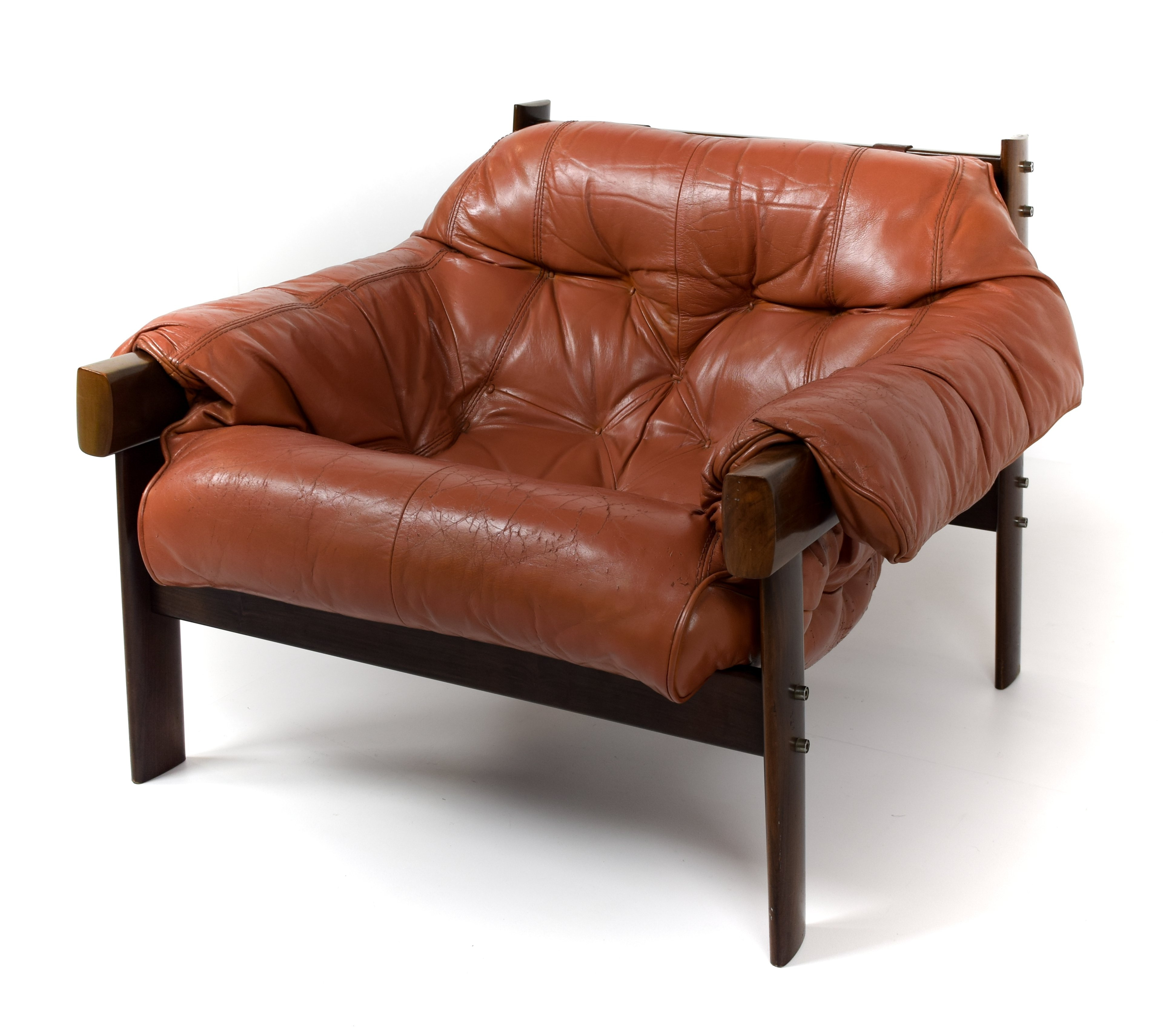
Other notable Lafer designs include:
The MP-13, his first complete living room set
The MP-81, a sofa with jatobá–Brazilian cherry–legs
The MP-89 armchair, designed in 1970 with plexiglass legs and leather cushions
The MP-071 armchair, his first piece with a visible fiberglass shell (1973)
The S1 collection (1975) of sofas, armchairs, and tables
And the MP-163 armchair (1976), better known as the "Earth Chair" ($1,700 in today’s dollars)

The Lafer catalog is vast, even including a foray into cars. His originality and dedication to the process are singular, “I love to make physical objects, and I’m constantly thinking about all the ways I can improve them.”
While not necessarily a household name, I’ve noticed vintage dealers increasingly use “Lafer style” as a way to describe unattributed pieces with similar rosewood frames, sculptural lines, and uses of leather. Some “Lafer style” pieces deemed leather may actually be naugahyde (if you know, you know), but the rising popularity of the Lafer name as a descriptor suggests an exciting demand for Brazilian design. If you ever win the lottery and are unsure how to spend your winnings, may I suggest starting here?
From Brazil to Hartford, Wisconsin
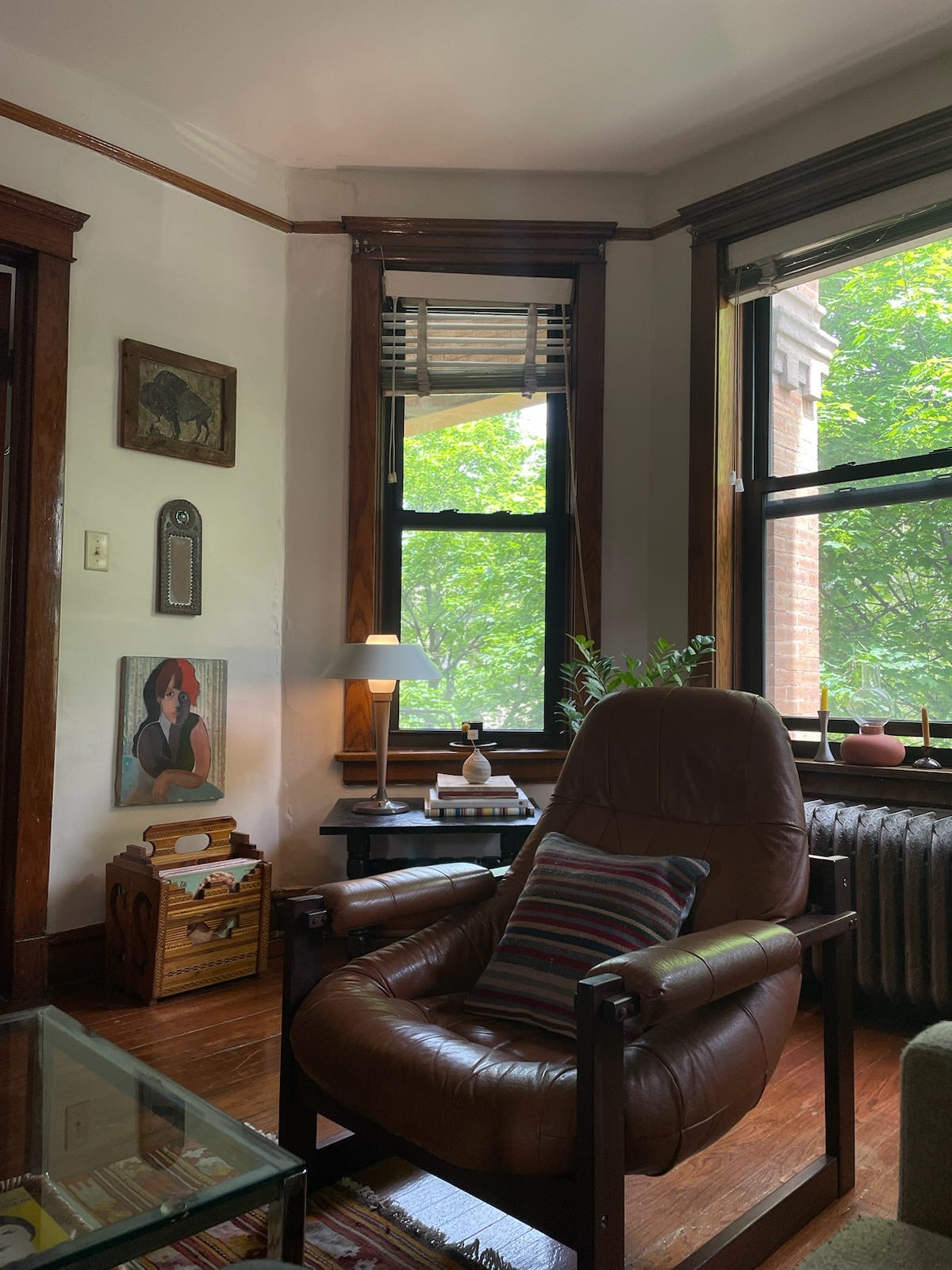
In early 2022 I fell down the vintage furniture rabbit hole, into which I’m still descending. I discovered Percival Lafer after seeing his work shared by dealers on Instagram and across design Twitter. Their sculptural quality, curves, leather-draped arms, and deep red-hued wood (jacaranda, unbeknownst to me at the time) left quite an impression.

I typed his name into Facebook Marketplace, not expecting much. However, hours prior in northwest Milwaukee a woman named Adrian listed a “Mid-Century Modern Leather Chair by Lafer Design.” Original camel leather, rosewood frame. I haggled with her, drove up from Chicago only to find it didn’t fit in my 2007 Volvo S80 (shocker), cried in my empty car home, probably got McDonald’s, rented a truck a few days later, and drove up once more to retrieve it.
I was ready to invest in a high-quality leather chair for my apartment and I lucked out with the timing. It’s corny but to me, the chair is a piece of design history. I frequently admire the profile, the negative space carved out by the suspended cushion. The rarity of the rosewood alone, which most countries have banned the cutting, exporting, and importing of, adds to its appeal.
You bet I tell each visitor this upon entering my apartment; I’m deeply annoying about the chair (and my other vintage finds). But everyone who sits in it genuinely compliments the comfortability, not just to appease me. Friends have sat for hours reading, chatting, drinking wine or coffee. My cat, Maple, has come to regularly sleep in it, a necessary exercise for me in releasing control.
Sources and inspo:
https://craftassociatesfurniture.com/pages/percival-lafer
https://side-gallery.com/designer/percival-lafer/
https://www.housebeautiful.com/design-inspiration/a35999148/brazilian-modernism/
https://www.incollect.com/articles/the-thrill-of-brazil-how-brazilian-mid-century-design-soars-above-and-beyond-beauty-and-function
https://www.pamono.com/stories/brazilian-modern
https://www.behance.net/gallery/78709161/Livro-Percival-Lafer?locale=en_US
https://www.dwell.com/article/this-brazilian-modernist-you-should-know-about-designed-countless-classic-chairs-82f4ecbd
Thanks for reading! As always, reach out if you’d like help sourcing vintage, styling, chatting through a space, whatevs. Love ya.