

On my mind this week
False spring, rearranging, Eileen Gray

The seconds-long hyper-awareness of leaving a hair salon and the imagined scrutiny passersby might subject you to, i.e. is this her best?
Getting one to two blocks away from said hair salon and assuming anonymity again (yes, I am always this person with freshly blow-dried hair).
Rewriting my proposed feedback loop from my last piece to not begin with imagery, instead forming desire first and then using imagery in the stage of inquiry to pull out specific ideas. Must write more about this use.
The first days of the first false spring may be upon us in Chicago. With new warmth and easier walking, the city stretches way out before you. You can cover more of it. It becomes the subject instead of the object between you and experience. I try to recognize qualities of a day that expand my sense of finite time that aren’t about productivity. Walking reigns supreme.
Considering different kinds of rearranging in the home. There’s a kind that is striving towards completing or reaching an ideal, a false best possible space aka best possible me. This often involves stepping into the perspective of a ghost audience. But the real stuff is the tinkering kind, born from a tiny quiet question or idea, the kind that is figuring out what’s best now. Not in the mythical future. Calibrating for the now, becoming the future me by honoring and making the current me.
One of my favorite urban living pastimes is losing track of time on a walk, not on my phone, watching someone dash into a bar or restaurant and guessing to myself based on their urgency what time they may be meeting someone, assuming it’s on the half hour or hour. Last night, this is how I learned it was just past 6:30pm.
Interior perspective drawings are a worthwhile rabbit hole. They abstract a room more than a photorealistic rendering but are more legible than floor plans. If you’re tired of decor media’s polished photography, these could be good for asking yourself what the designer might be working out spatially or formally. Cooper Hewitt archive search here. Tack on a style or designer in the query to get more specific.
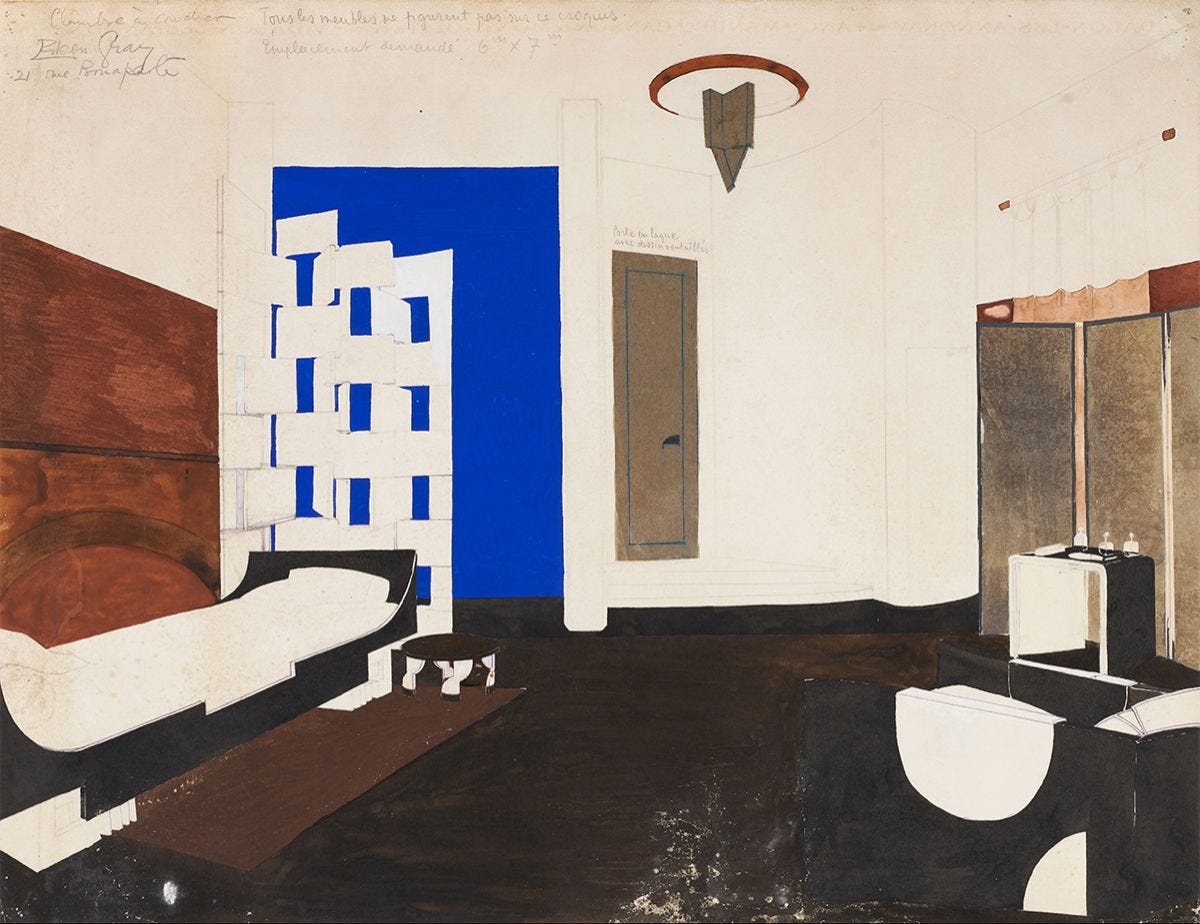
Spending a few minutes with Gray’s boudoir. The bold blue! I wonder if that suggests a plane or a wall, probably a plane. The bed is architectural, anchored in space. Both bed and daybed, its symmetry sleigh-like, its horizontal orientation doesn’t read as head-here-feet-there. The floor is mostly unobstructed. The stars for me are her famed screens. We don’t really use screens this way now, but here it’s interesting to consider within historical context of the boudoir. Coming from the French verb bouder, to sulk, these rooms were an expression of femininity (dressing, getting ready) and a retreat from social life (taking private meetings, writing letters).
These screens uphold that privacy but in a less decorative way. Are these lacquered? Gray studied traditional Japanese lacquer techniques about 15 years prior to this. She used screens to create spatial fields, sectioning off zones, making them more architecture than ornament. They’re planar instead of interlocking hinged panels, the more East Asian style.
Questions this room may make you ask: how can I better create zones in a room with different purposes, should I invest in a screen as a useful divider or should I reorient a piece of furniture, where does a room want to be open and where does it want to be closed or in between, where does privacy exist, where do I want to feel protected and where do I want to feel exposed, how much circulation space do I need, what are new paths I can chart, etc.
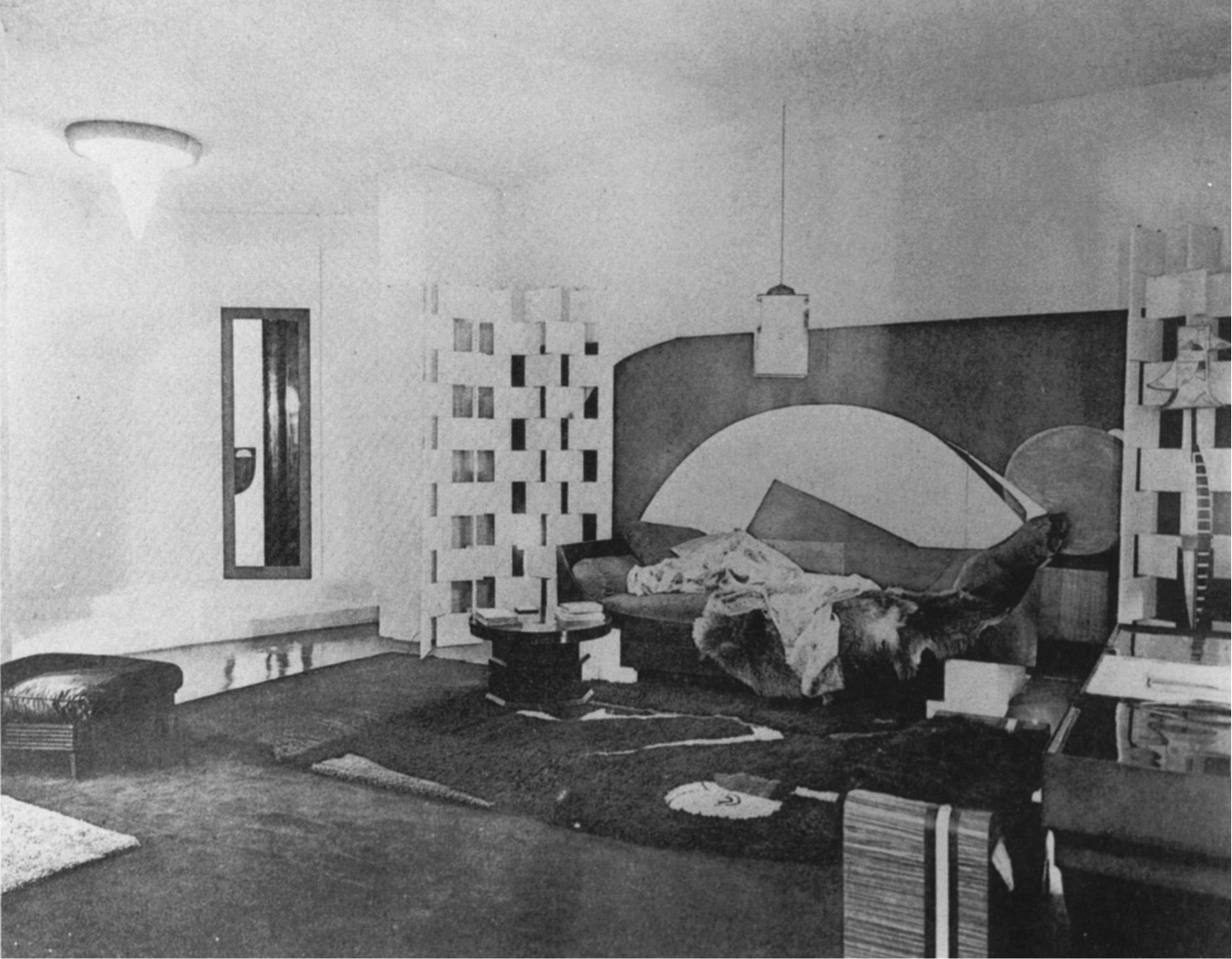
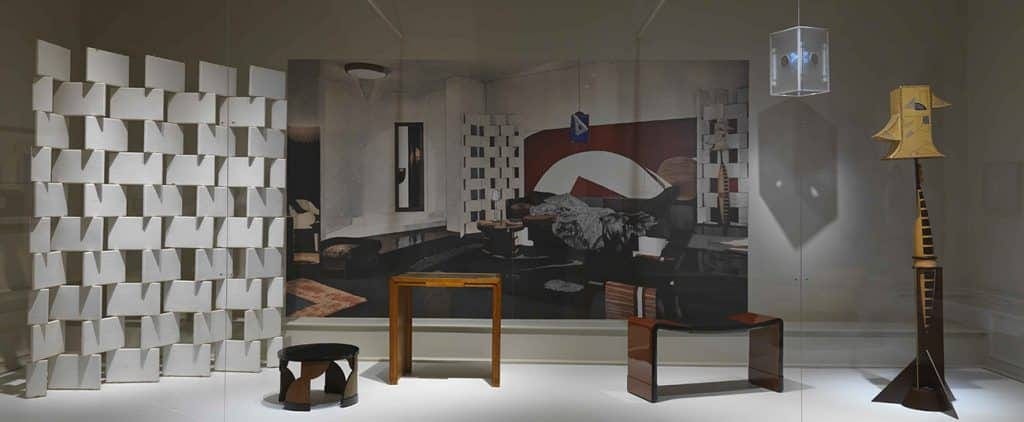
May you find yourself down a nice decor rabbit hole soon.
What a miracle to have another day to look and think and breathe and walk around.

x,
Sarah